
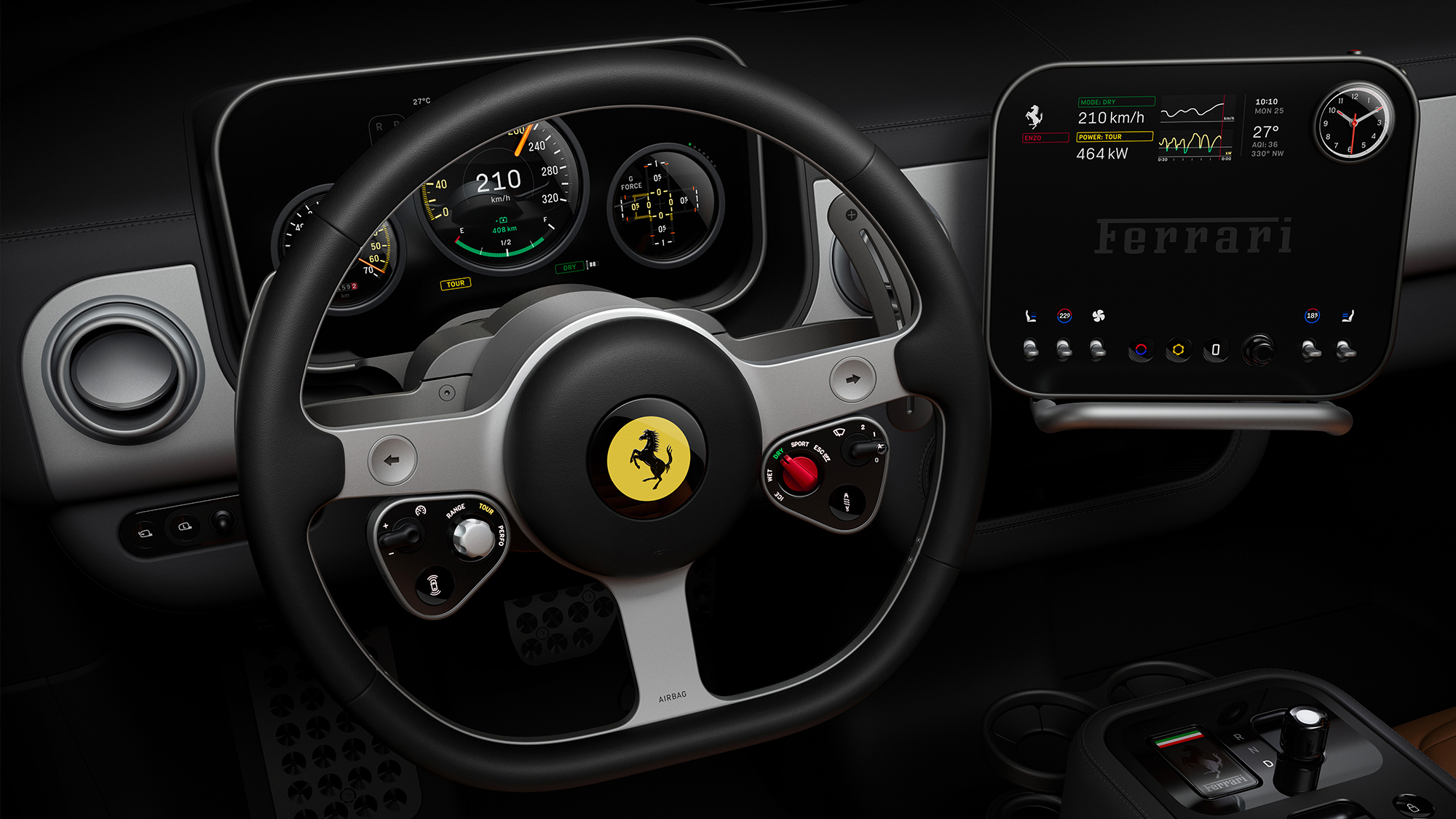
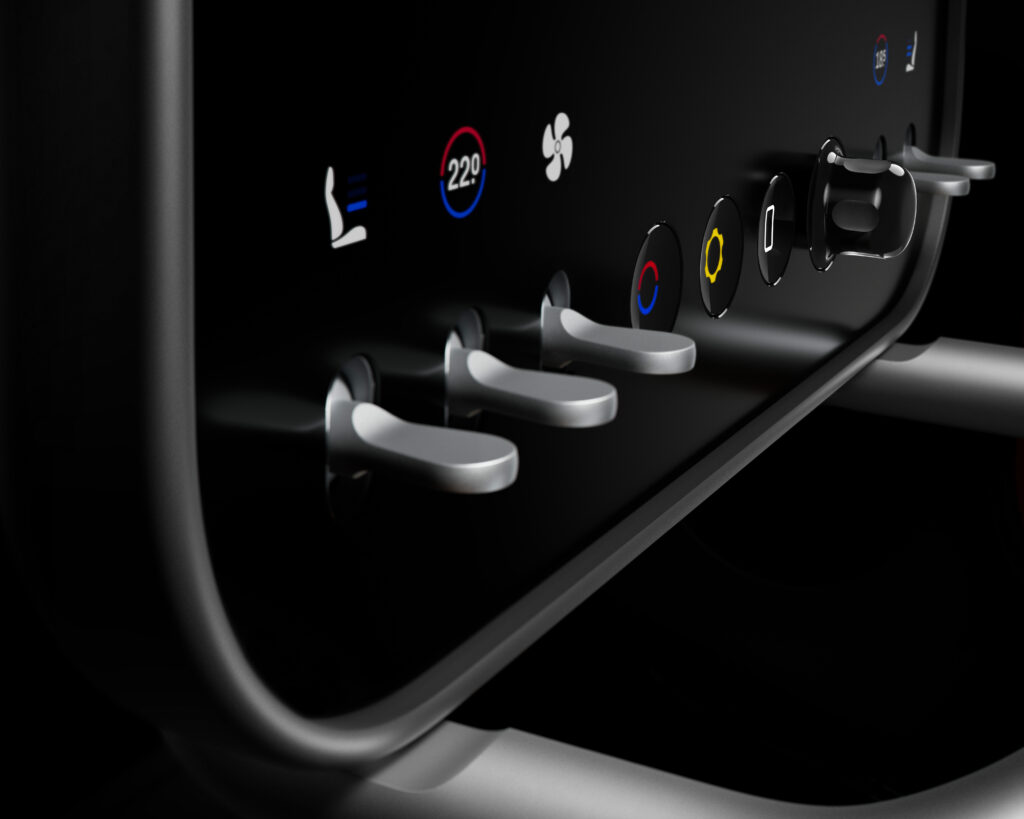
Rather than surrender to technology with glass slabs and haptic pads and touchscreens, Ferrari defies convention with its first bold step towards electrification. The Ferrari Luce is a rebellion of the senses—a cockpit built on a mix of ritualized physical controls that invite your touch, your engagement, your respect. This is a cockpit where the electronic engineering that define supercars of our era has been seamlessly fused into the car so that it is not a barrier but rather an aid in the reconnection of man and machine. One satisfying click at a time.
The Wheel: Heritage in Hand
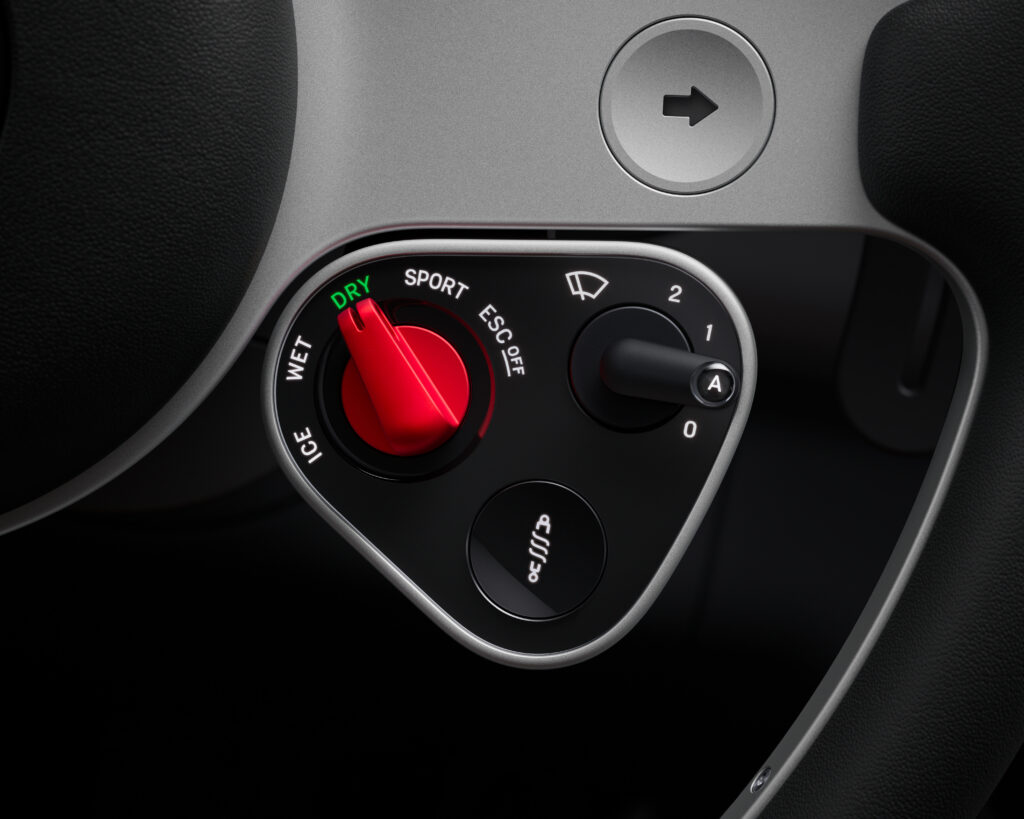
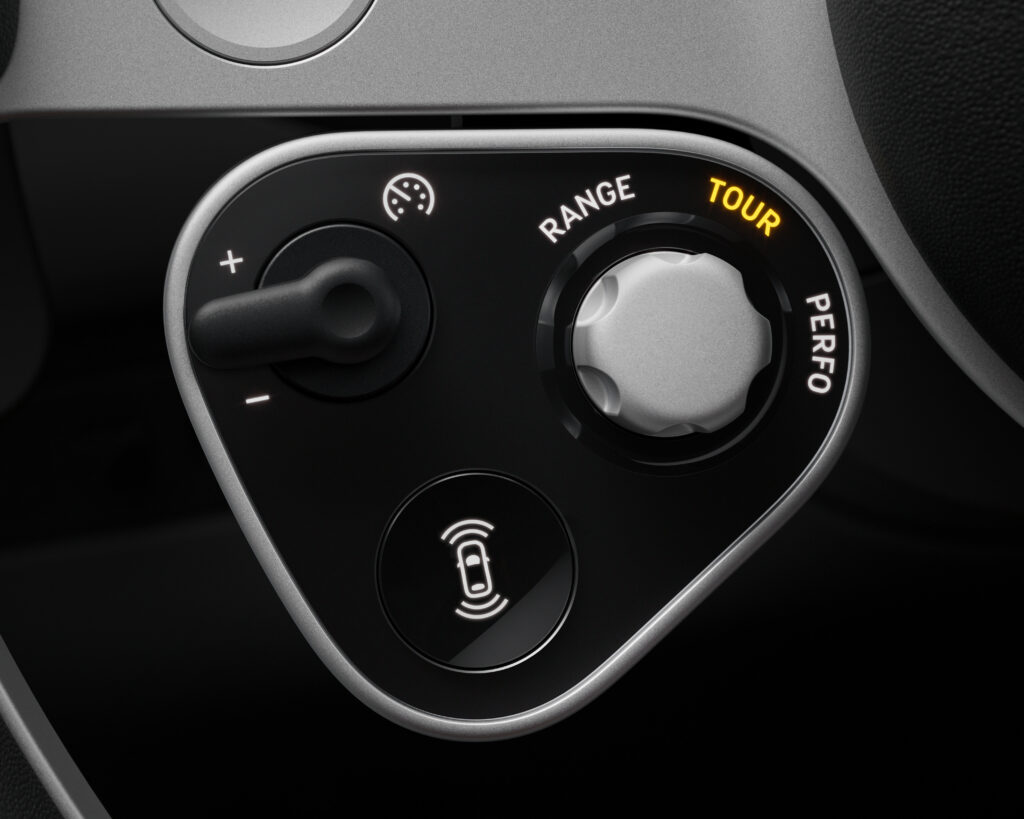
Begin where every gentleman should: at the helm. The Luce’s steering wheel is a love letter to Ferrari’s past, reimagining the iconic 1950s three-spoke Nardi wheel in a lightweight, three-spoke aluminium form. The spokes are left deliberately exposed, showcasing the raw strength of their finish. Crafted from 100% recycled alloy developed exclusively for Maranello, the wheel is 400 grams lighter than standard. Its two analogue control modules—borrowed directly from Formula One— tuned by over twenty test-driver evaluations to deliver the perfect accoustic click and mechanical feedback. It is precise, honest, and deeply satisfying.
The Ritual of the Key
Starting the Luce is not a chore; it is theatre. The key itself is a tactile objet d’art: Corning Fusion5 glass houses an automotive-first: E Ink display. Slip the elegant key into the centre console dock, and watch the choreography unfold—the key’s E ink shifts from yellow to black, melting into the glass surface as the control panel illuminates. The car awakens not with a silent shrug, but with anticipation.
Displays with Depth
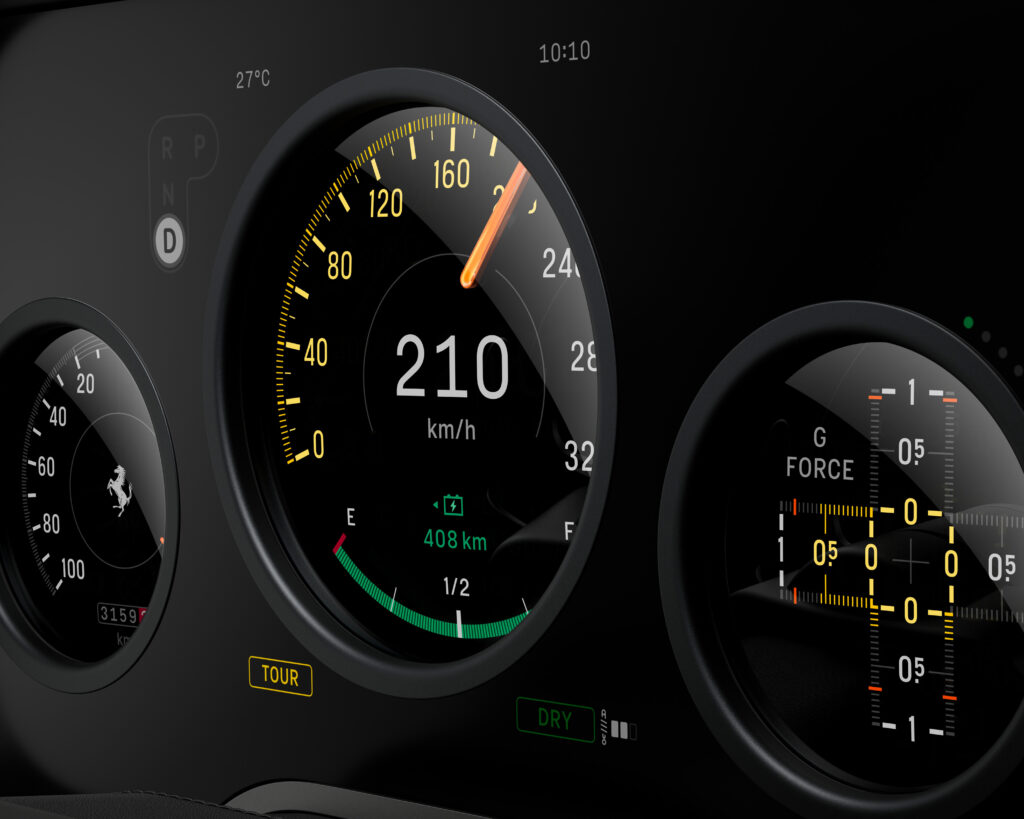
Ferrari has not abandoned screens; it has tamed them. Blending analog heritage into the digital displays, The driver’s instruments moves with the steering wheel, ensuring the perfect view the drivers preferred position. reach. The graphics on the displays are inspired by 1950s Veglia and Jaeger instruments and mimic analogue dials for instant legibility. There are touches of clean and highly legible aviation-style instrumentation here too. The goal? Reduce the driver’s cognitive load. Information at a glance, not a stare.
The Multigraph and The Shifter
The centrepiece of the cabin’s control panel is the multigraph—a micro-engineered marvel hidden within the central display displaying four modes – clock, chronograph, compass, and launch control – withanimated transitions reminiscent of the finest chronographs. It is watchmaking artistry bolted into a dashboard.
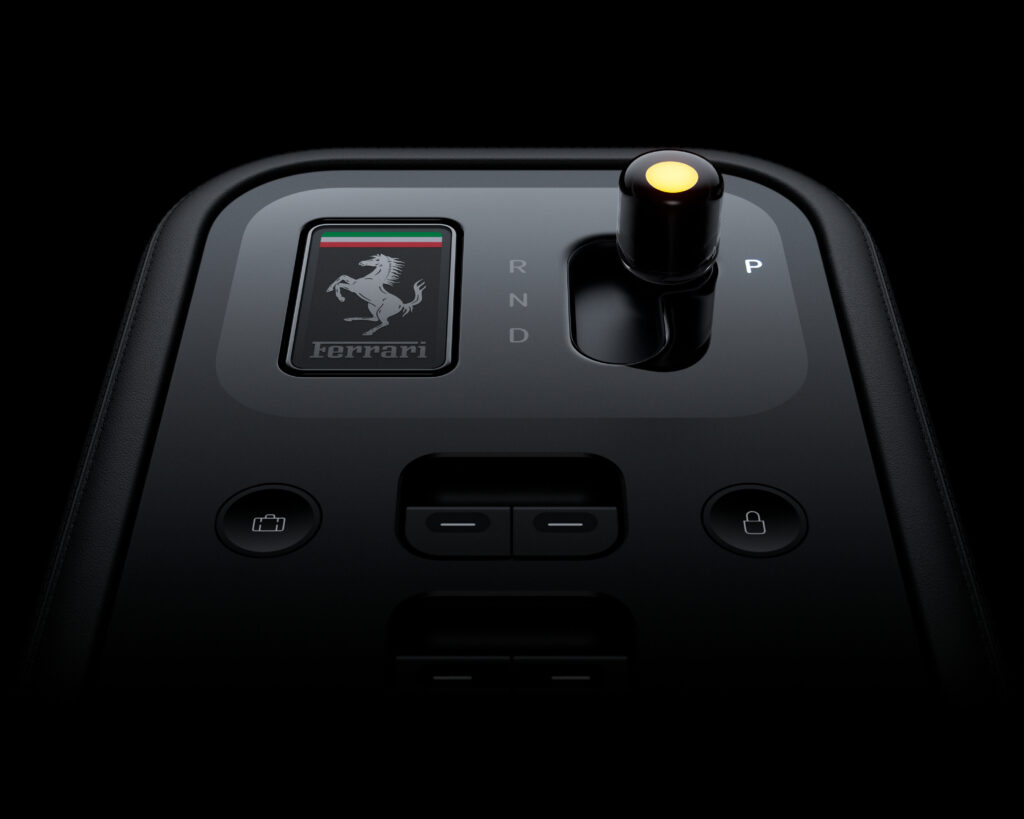
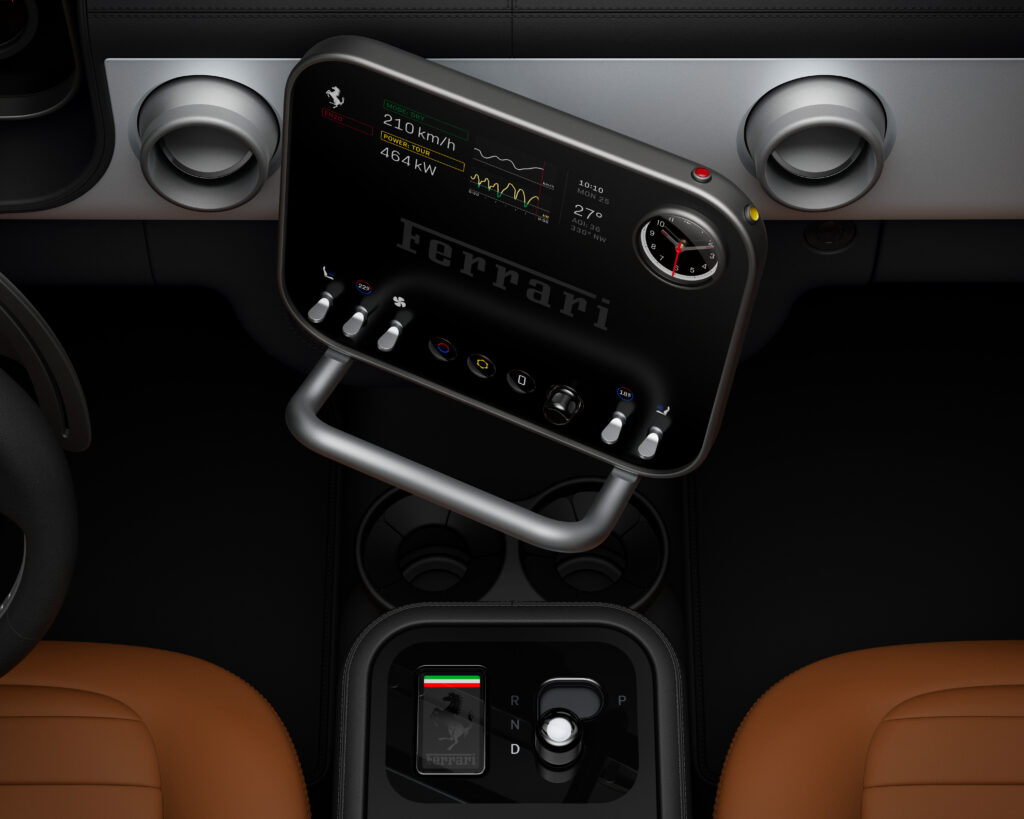
And then there is the shifter. A solid sculpture of Fusion5 glass. Strong, elegant, and utterly tactile. Every interaction—every slide of the palm rest, every swivel of the ball-and-socket control panel—reminds you that driving is a physical dialogue and not just a passive swipe.
Designed for Emotion
This beautifully cockpit is a collaboration between former Apple design chief Sir Jony Ive, renown industrial designer Marc Newson and Ferrari’s own in-house design team headed by Flavio Manzoni gives us a glimpse into the bold direction Ferrari is taking with its first electric car… and we can’t wait to see the complete package.
The Ferrari Luce is beautiful design that reminds us that their cars do not merely transport you. They invite you to engage, to feel, to remember why the Prancing Horse still makes a gentleman’s heart beat faster.