
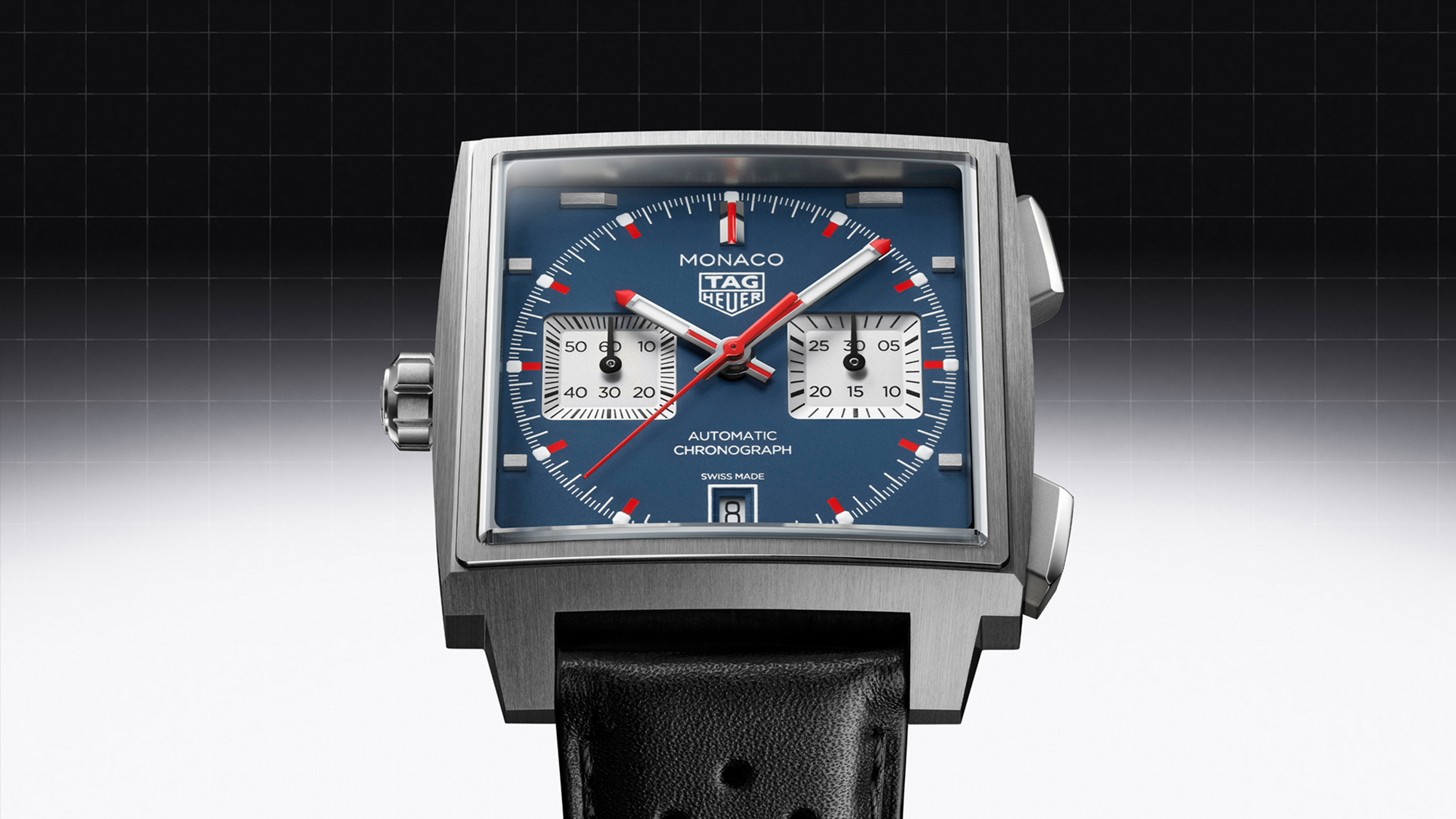
Half a century after it’s bold arrival in the watch world, the Monaco gets a ground-up reboot—smarter, sharper, and more wearable than ever.
There are watches that tell time, and there are watches that make statements. The TAG Heuer Monaco has always belonged to the latter category. When it debuted in 1969, it wasn’t just unconventional—it was audacious. A square, water-resistant chronograph wristwatch, powered by the world’s first commercially available automatic chronograph movement, the Calibre 11. Nothing else looked like it. Nothing else dared.
That spirit of avant-garde defiance has defined the Monaco for more than five decades. Now, it enters a new chapter. And for those who appreciate the intersection of heritage and innovative engineering, this is news worth raising a glass to.
From Project 99 to a Legend
The late 1960s saw the watch industry moving away from manual-wind movements. Convenience was king, and self-winding calibres were on the rise. But Heuer faced a problem: no automatic chronograph movement existed. The solution came via “Project 99,” a collaboration with Buren and Dubois-Depraz. The result—the Calibre 11—debuted on 3rd March 1969. Its micro-rotor design forced the crown to the left side of the case. What could have been a compromise became an iconic signature, a silent reminder that daily winding was a thing of the past.
Such a movement demanded an equally radical vessel. Sticking to what had already been done was never this watches way. The Monaco was born.
The New Generation: Ergonomics Meets Attitude
The original reference 1133 Monaco was bold, angular, and unapologetically square. It was ahead of it’s time in all aspects, perhaps a little too ahead. But it soon cemented it’s iconic status when it was worn by Steve McQueen in the 1971 racing movie Le Mans. While more of a cult favorite, After a 1997 relaunch that celebrated the maveric timepiece, today the Monaco is a pillar of TAG Heuer’s collection.
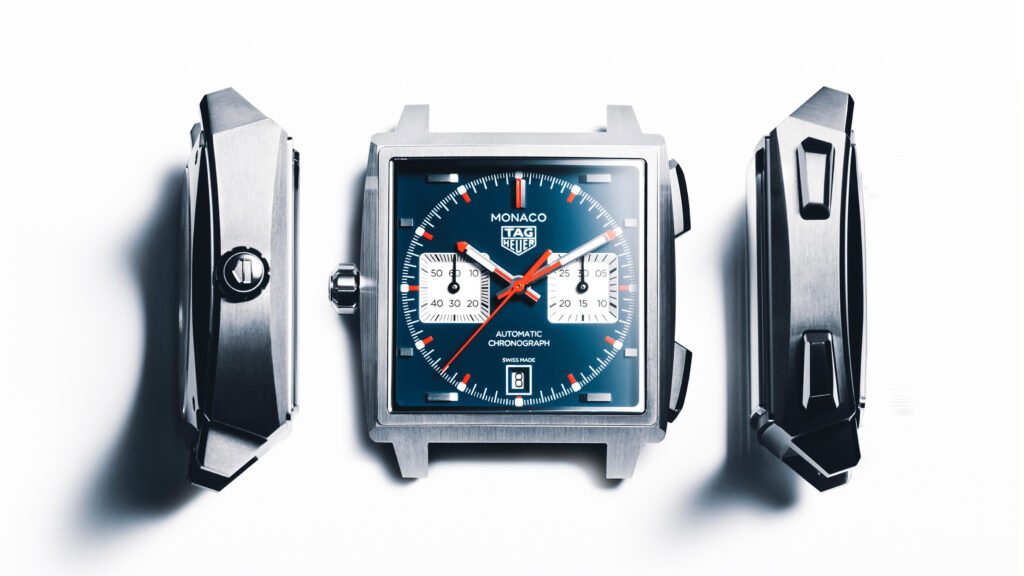
And now, the maison has reimagined it for the modern wrist. The new Monaco Chronograph retains those sharp, striking lines but refines them. The case is grade 5 titanium, measuring 39mm, with gently curved sides that hug the wrist. The caseback features a smaller round central section that tapers toward the edges—a subtle nods to the original that dramatically improves comfort. The sapphire crystal is closer to a true square. Every edge has been reinforced. The result is unmistakably a Monaco, only more so.
Three Faces, One Heart
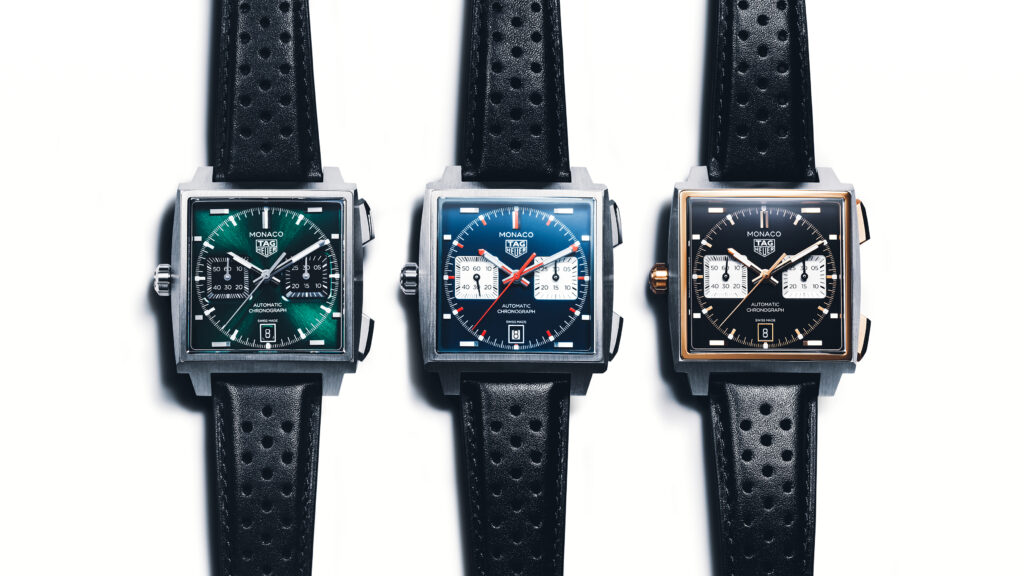
The collection launches in three colorways. The signature blue, directly inspired by McQueen’s Le Mans watch, returns with sunray brushing. A dark green version channels classic British Racing Green, elegant and understated. And for those who prefer their statements with a touch of luxury, a black dial sits inside a two-tone case of titanium and 18K 5N rose gold. Each pairs with a racing-inspired strap and a newly designed titanium folding clasp.
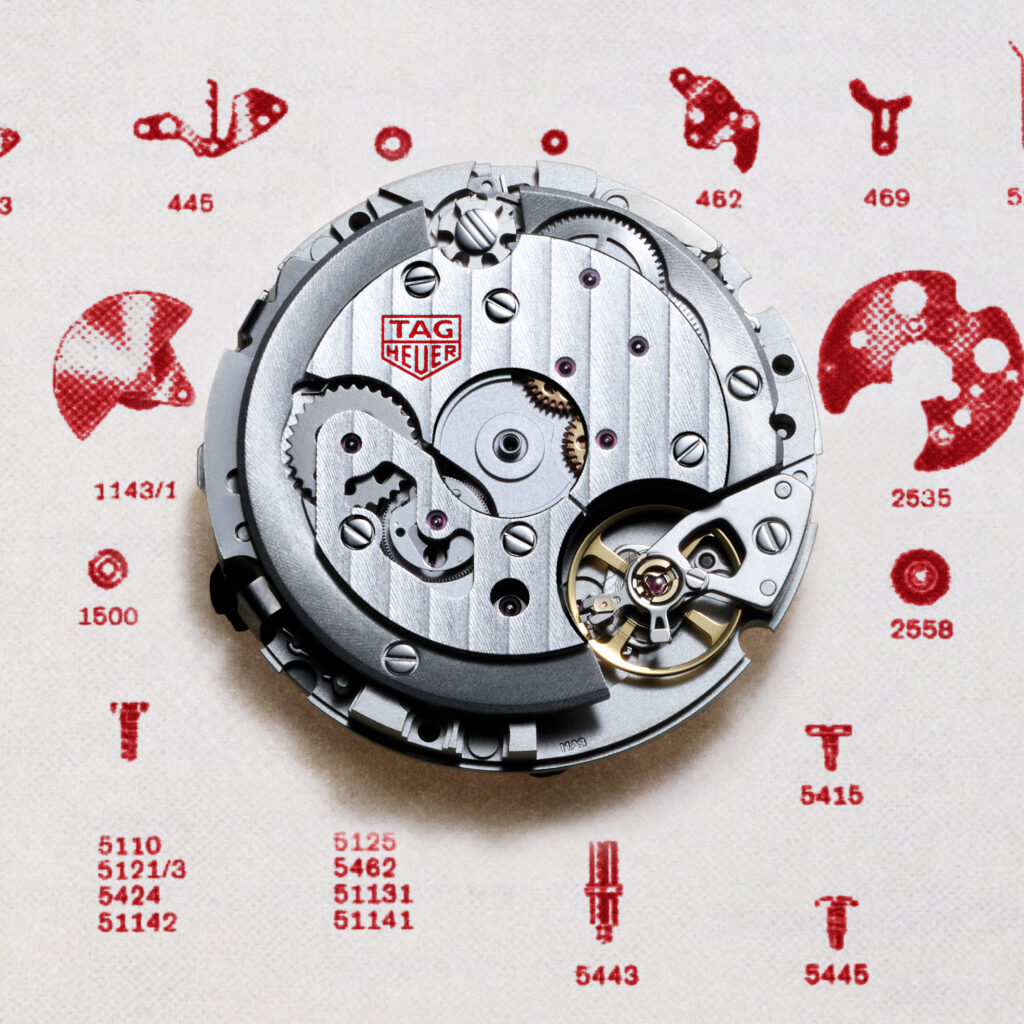
But the real story lies beneath the dial. The new in-house Calibre TH20-11 replaces the old movement. Based on TAG Heuer’s proven TH20-00, it has been reconfigured and refined over several years. It offers an 80-hour power reserve and a five-year warranty. The bi-compax layout—subdials at three and nine, date window at six—pays direct homage to the original Calibre 11. And yes, the crown remains on the left. Collectors wouldn’t have it any other way.
Built for the Next Generation
This isn’t a nostalgia play. It’s a genuine reinvention. The new Monaco is designed to be worn—by more people, in more settings, than ever before. Whether you’re drawn to McQueen’s rebellious cool or Verstappen’s modern dominance on the F1 circuit, this watch bridges eras without compromising an ounce of character.
Half a century on, the square icon is no longer just a conversation starter. It’s a contemporary classic, fully realised. And it’s ready for your wrist.